- Ваша корзина пуста
- Продолжайте Делать Покупки



Application
Educational laboratories, industrial production lines, development and research applications.
RF signal generator that spans from 9KHz to 3.6GHz is an essential tool for testing and evaluating RF and microwave systems. It provides a broad frequency range suitable for various applications in telecommunications, electronics, and research.
Features
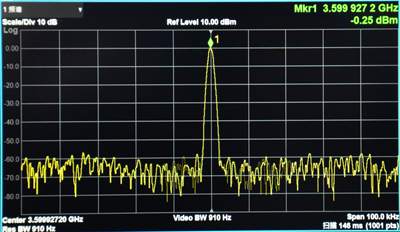
1. Frequency up to3.6GHz
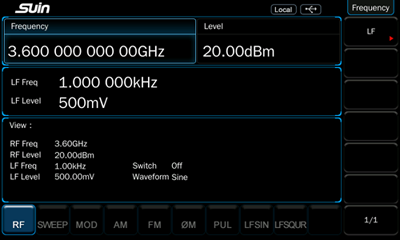
2. 0.01Hz frequency resolution
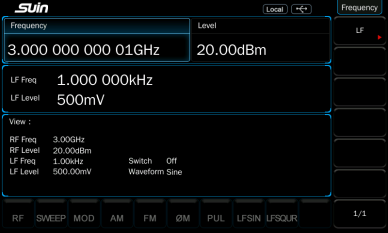
3. Level output from -110dBm to +13dBm, maximum level up to +20dBm
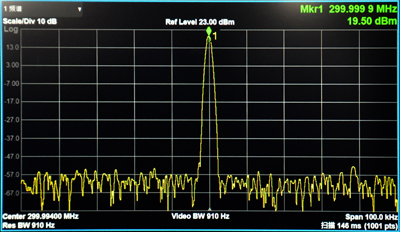
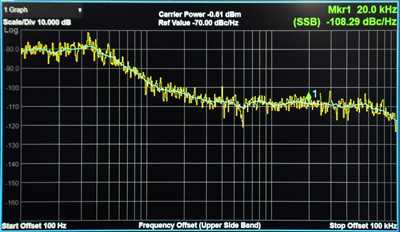
4. Phase noise: < -105dBc/Hz@20 kHz (typ.)
5. Level accuracy: ≤ 0.5 dB (typ.)
6. Provides standard AM, FM, φM and Pulse modulation (on/off ratio up to 70dBc)
7. 7 inch TFT capacitive touch screen
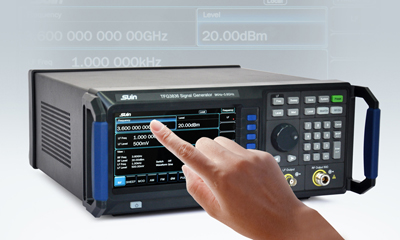
8. Standard interface include USB Host, USB Device and LAN.
Applications:
Telecommunications: Used for testing and calibrating communication devices, including mobile phones, base stations, and satellite communication systems.
Electronics Manufacturing: Essential in the design, testing, and validation of RF components such as amplifiers, mixers, and filters.
Defense and Aerospace: Critical for testing radar systems, electronic warfare equipment, and avionics.
Research and Development: Utilized in both academic and industrial research for experiments involving RF and microwave signals.
Questions & Answer
From TFG3836 RF Signal Generator, 9kHz to 3.6GHz
Q: Does advance modulation Pulse and Pulse train are supported on TFG3836? Is it an option?
A: Yes, but Pulse modulation and Pulse train same as AM, FM, and øM modulations are standard on the TFG3836. It’s no need for user to pay it additionally.
Q: Is any more high accuracy time base option are available for user to select if higher performance RF output is needed?
A: Yes, optional OCXO improved stability to 0.1ppm and can be purchased and it’s better to confirm and order it before factory shipment, because it’s required to be welded on circuit.
Q: What kind of communicational interfaces are supported on TFG3836?
A: There are 3 types of communication interfaces- USB Device, USB Host and LAN, of which USB Device is used to update device firmware or data storage, while USB Device and LAN are mainly used to carry out remote control between PC and device with help of provided PC software and SCPI commands.


